
Can Americans Get Legally Married in France?
Yes, Americans can get legally married in France, but it is not as simple as arriving for a destination wedding and signing papers on the day.
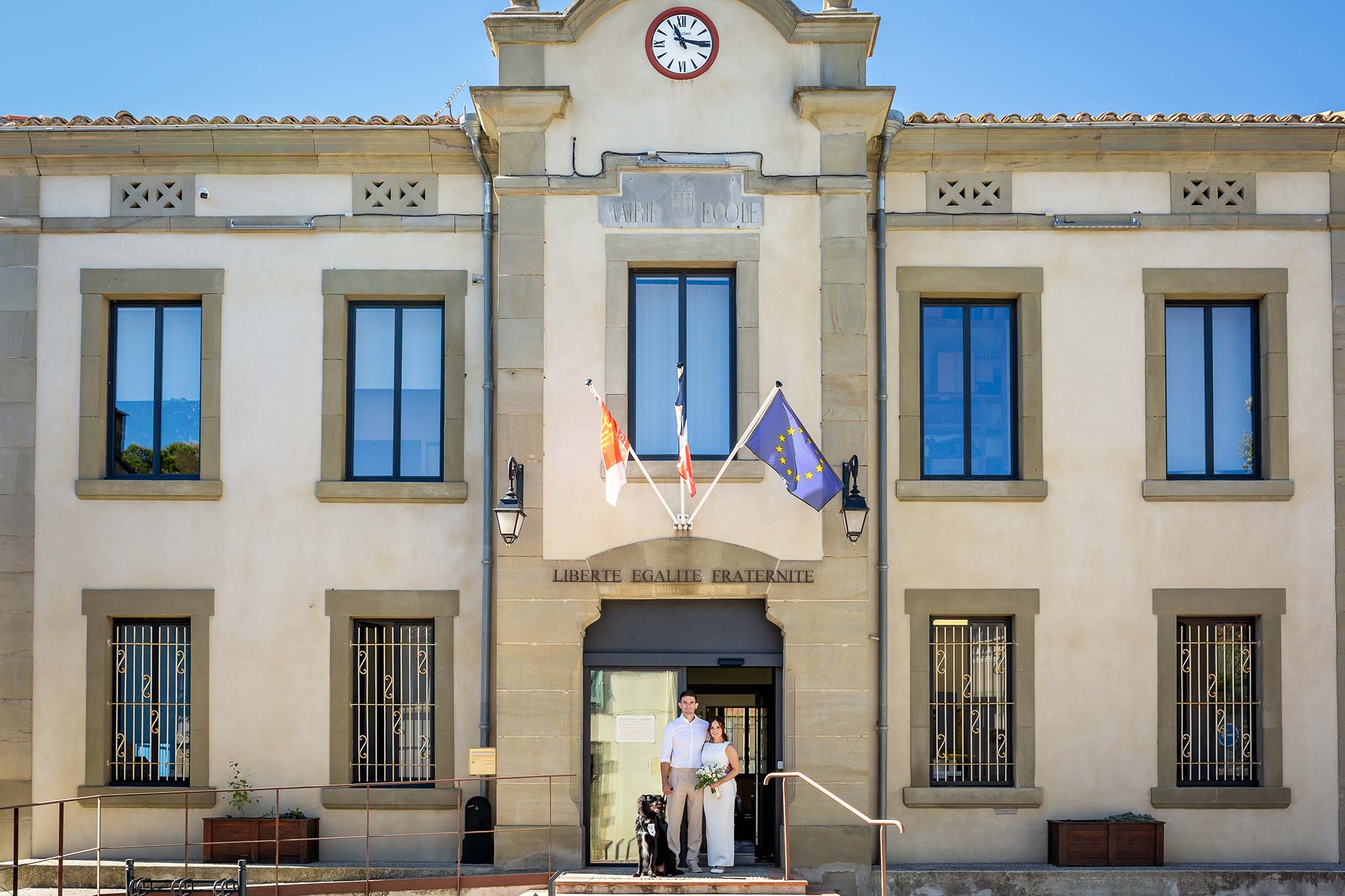
A legal wedding in France must be a civil ceremony held at the mairie, the local town hall. At least one of you usually needs a real, documented connection to the commune where you want to marry. For many American couples planning a destination wedding in France, that is the part that changes everything.
The good news is that you still have options.
Some couples complete the French legal process and marry at the mairie. Many others marry legally in the United States first, then come to France for their wedding ceremony, vows, rings, dinner, speeches and dancing. From a guest’s point of view, and from behind the camera, that second version still looks and feels like the wedding day.
I’m Kerry Morgan, a British wedding photographer based near Pézenas in the South of France. I photograph American, British and international couples planning château weddings, vineyard celebrations, small weddings and elopements across Occitanie, Provence and the wider South of France.
This guide explains what is possible, what French authorities usually require, and why a symbolic wedding ceremony in France is often the most practical choice for American couples.
This article is practical planning guidance from a wedding photographer, not legal advice. Always confirm the current requirements directly with the mairie where you hope to marry.
The short answer
Americans can get legally married in France if they meet the French legal requirements.
The legal ceremony must take place at the mairie. At least one partner usually needs to have domicile or residence in the commune where the marriage will take place, or a qualifying family connection through a parent who lives there.
If that is not practical, the simpler option is to marry legally in the United States first, then hold a symbolic wedding ceremony in France.
That is what many American couples actually do.
What counts as a legal wedding in France?
France only recognises civil marriage.
That means the legal ceremony must be performed by the mayor, a deputy mayor or another authorised civil officer. It normally takes place at the mairie, or in some cases another public communal building within the same commune.
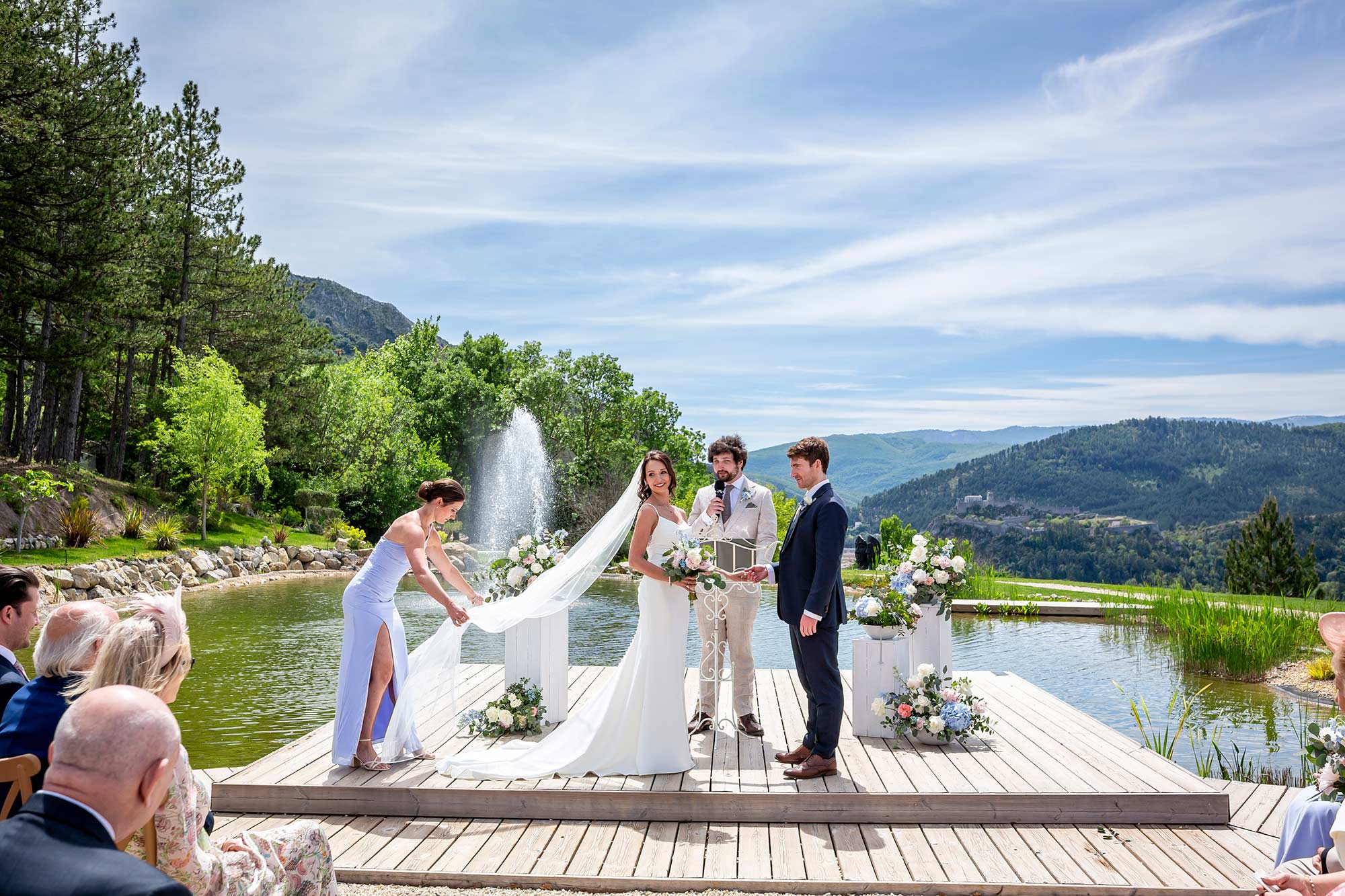
A château ceremony, vineyard ceremony, church blessing, outdoor vow exchange or celebrant-led ceremony can be beautiful and deeply personal. It can include vows, rings, music, readings, family involvement and everything your guests understand as a wedding ceremony.
But it is not legally binding in France.
This can surprise American couples, because in many US states a religious officiant or licensed celebrant can perform a legal wedding. France works differently. The mairie ceremony is the legal act. Everything else is ceremonial.
You can read the official French marriage requirements on Service-Public, the French government’s public information website.
The French residency rule most American couples do not expect
This is usually the point where American couples realise they need to make a decision.
To marry in a French commune, at least one of you usually needs to have domicile or residence there. For residence, Service-Public states that it must be established by at least one month of continuous housing at the date when the banns are published.
In plain English, this means one of you normally needs to have lived in that specific commune for at least a month before the public notice of marriage is displayed.
This does not mean staying in France for a few nights before the wedding. The mairie will usually want proof. That might be a rental agreement, rent receipt, utility bill or another document showing residence in the commune.
The details can vary from one mairie to another. Some town halls are used to international couples. Others are not. Always ask the actual mairie where you hope to marry what they require, and get the answer in writing.
This is why many American couples decide not to do the legal part in France. It is possible, but it needs time, documents and a realistic plan.
What are the banns?
Before a legal marriage can take place in France, the mairie publishes a public notice of the marriage. This is called the publication des bans.
The banns are displayed for 10 days. The wedding cannot take place until after that period has passed, and the marriage file must be complete and up to date.
This means the timing is not simply:
arrive in France, hand in papers, get married.
You need to allow for the residence requirement, the mairie checking your file, the 10-day publication of banns and the mairie’s availability for the ceremony.
For a destination wedding, that can be awkward unless one of you genuinely has the time and reason to be in the commune before the wedding.
Can Americans get married in France without living there?
Usually, no.
If both partners are foreign and neither of you lives in France, a standard legal marriage at a French mairie is generally not available.
There is one route that may help some couples. A marriage can sometimes take place in the commune where one partner’s parent has their domicile or residence. This can be useful if a parent owns a home in France or genuinely lives in the commune where you want to marry.
Again, this is something to check directly with the mairie. You will need documentary proof.
For most American destination weddings in France, the simplest route is to do the legal marriage in the United States, then have the full wedding celebration in France.
That does not make the French ceremony fake. It simply means the legal paperwork has already been handled elsewhere.
What I usually see American couples do
Most American couples I photograph in the South of France choose to marry legally in the United States first.
They then come to France for the day that everyone experiences as the wedding: the ceremony, vows, rings, readings, drinks, dinner, speeches, dancing and photographs.
This route keeps the legal side simple and gives couples much more freedom. They can hold the ceremony in a château garden, under trees, in a vineyard, beside a pool, in an old stone courtyard or anywhere their venue allows.
For many couples, this is the best balance. The legal marriage is clean and simple. The French wedding day is emotional, relaxed and beautiful.
If you are still working out what kind of celebration suits you, my guide to getting married in France is a useful next read.
What documents do Americans need to marry legally in France?
The exact document list should always come from the mairie, but American couples are commonly asked for documents such as:
- valid passports
- long-form birth certificates
- proof of domicile or residence in the commune
- witness details and copies of witness ID
- divorce decrees or death certificates, if either person was previously married
- an attestation replacing the certificat de coutume and certificat de célibat
- apostilles for foreign documents
- certified French translations
For US citizens, the attestation is especially important.
The United States does not issue the same marriage capacity documents that some other countries provide. Instead, US citizens may sign an Attestation tenant lieu de certificat de coutumes et de célibat, often referred to as PDF-388.
You can check the US Embassy guidance for marriage in France before you start gathering documents.
Do not rely only on general wedding blogs for this part. Legal requirements can change, and individual mairies may interpret paperwork differently.
Apostilles and sworn French translations
American documents usually need to be apostilled before they are used in France.
An apostille is an official authentication attached to a document so it can be recognised abroad. For state-issued documents, such as a birth certificate, this is usually handled by the relevant Secretary of State in the US state where the document was issued.
USA.gov has a clear page on how to authenticate US documents for use outside the United States.
After apostilles, your documents will usually need to be translated into French by a sworn translator, known as a traducteur assermenté.
Do not use a normal translation service unless the mairie has confirmed it will accept it. Some mairies have a preferred list of sworn translators. Others may direct you to the local Cour d’Appel list.
This is one of the reasons I suggest starting early. Ordering fresh certificates, getting apostilles and arranging sworn translations can take longer than expected.
A realistic timeline for a legal wedding in France
If you want to marry legally in France, start researching the paperwork 9 to 12 months before your wedding.
That does not mean every document should be ordered immediately. Some documents need to be recent, so ordering too early can create problems. But you do need to understand what the mairie requires, whether you meet the residence rule, and how long the US apostille process will take.
A realistic order looks like this:
- Choose the commune where you hope to marry.
- Contact the mairie and ask for their exact marriage requirements.
- Confirm whether you qualify through residence, domicile or parental residence.
- Check which documents need to be recent.
- Order long-form birth certificates at the correct time.
- Arrange apostilles in the relevant US state.
- Commission sworn French translations.
- Complete the US Embassy attestation if required.
- Submit the full marriage file to the mairie.
- Wait for the publication des bans.
- Confirm the civil ceremony date with the mairie.
The safest approach is to deal directly with the mairie, not to rely on assumptions from wedding forums or venue advice.
Can the legal ceremony take place at your château or wedding venue?
No, not as a standard legal wedding.
A legally binding French civil ceremony must take place at the mairie or, in some cases, another authorised communal building. The mayor does not simply travel to a private château, vineyard estate, villa or hotel to conduct a legal wedding in the way a celebrant might.
This is another reason symbolic ceremonies are so common.
A symbolic ceremony gives you freedom over the place, timing, music, readings and atmosphere. You are not restricted by the formal structure of the mairie ceremony.
If you are still choosing the setting for your celebration, my guide to South of France wedding venues may help you compare the kinds of places that work well for international weddings.
The simpler option: marry legally in the US first
For many American couples, this is the cleanest route.
You marry legally at home, then travel to France for the wedding celebration. Your French ceremony can still include vows, rings, readings, music, a professional celebrant, family involvement and all the emotional parts of a traditional wedding.
The only difference is that the legal part has already happened.
This is not a second-best version of the day. It is what many destination weddings in France actually are.
The commitment is real. The emotion is real. The celebration is real. The photographs are real.
For smaller celebrations, you may also find my guide to planning an elopement in France useful.
Will the United States recognise a French marriage?
In general, a marriage that is legally performed abroad is recognised in the United States, provided it was valid under the law of the country where it took place.
The US Embassy states that you do not need to register your French marriage with the Embassy.
For practical things such as changing your name, updating ID, dealing with insurance or presenting your marriage certificate in the US, you may still need an apostilled French marriage certificate and a certified English translation.
Requirements can vary by state and by institution, so check with the relevant US authority before assuming one document will work everywhere.
What does a mairie ceremony look like?
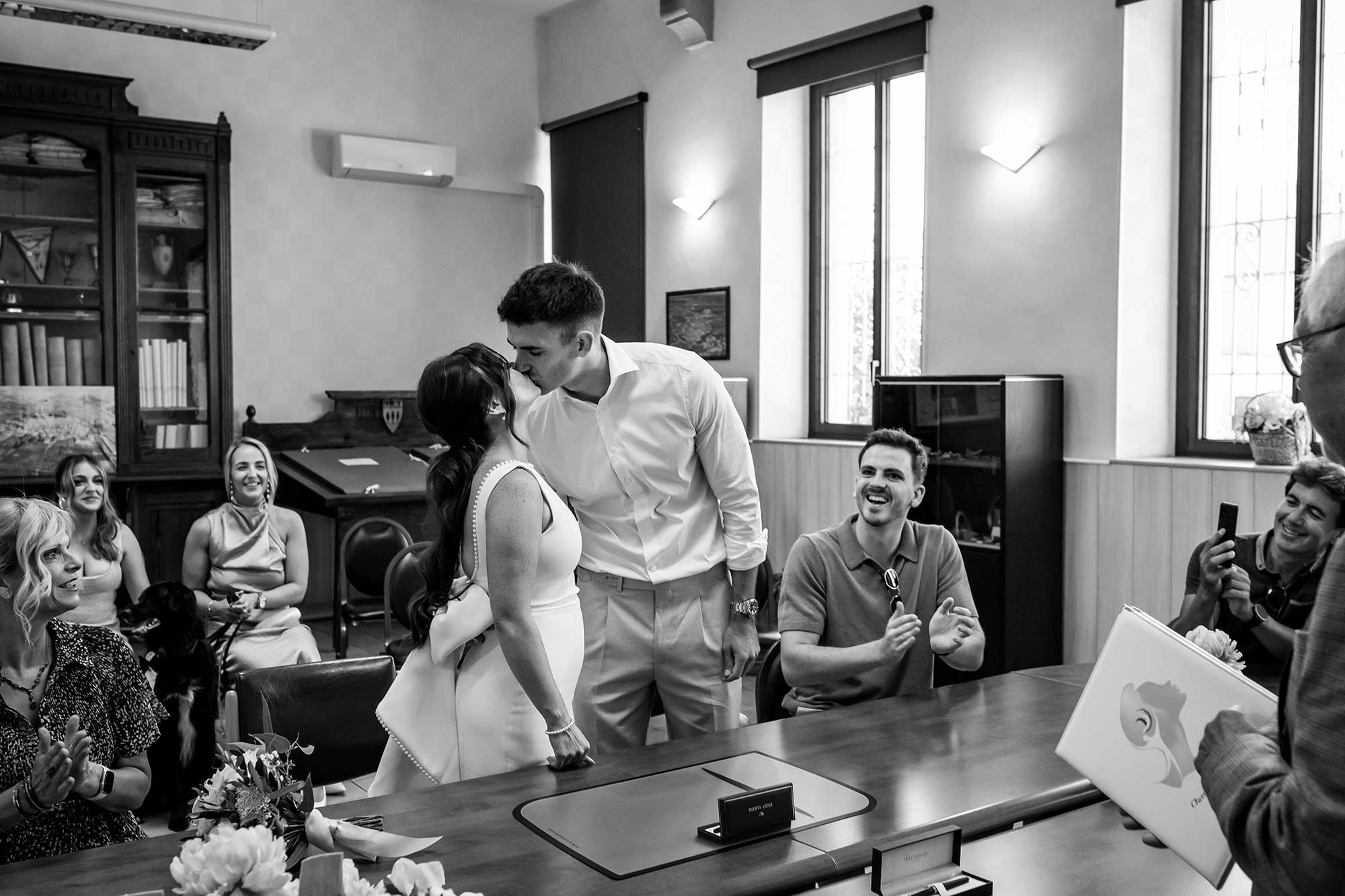
A mairie wedding is usually short, formal and structured. It is not designed like a destination wedding ceremony.
You will normally be in a town hall room with your witnesses and the civil officer. The ceremony may be in French. A translator may be needed if one or both of you does not understand French.
That said, mairie ceremonies can photograph beautifully. The rooms often have old windows, polished floors, flags, portraits and a quiet sense of occasion.
I have photographed couples moving from the official legal ceremony at the mairie to a relaxed celebration at a private estate afterwards. The contrast can work very well.
The mairie gives you the legal moment. The venue gives you the atmosphere.
Legal wedding in France vs symbolic wedding in France
The easiest way to think about it is this.
A legal wedding in France gives you a French marriage certificate. It has to follow the mairie process, and you need to meet the legal requirements.
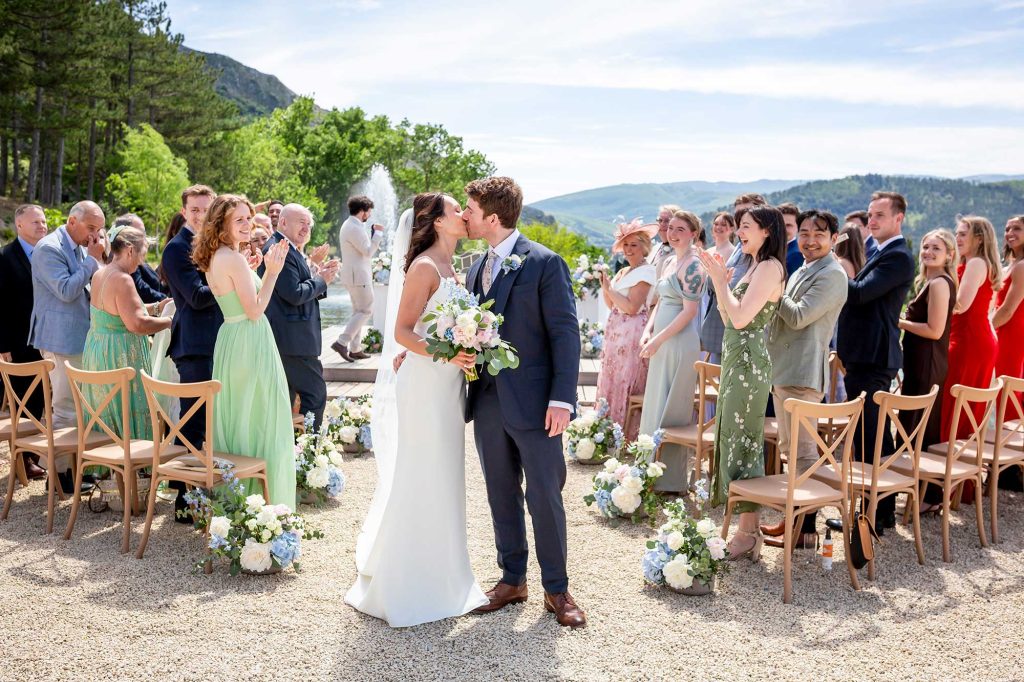
A symbolic wedding in France does not create a legal marriage. It gives you freedom over the ceremony itself.
For American couples, the symbolic route is often more practical because it avoids the residence issue, the French legal file and the uncertainty of dealing with a mairie from overseas.
That is why many couples legally marry in the US first, then treat the French celebration as the wedding day.
Your guests do not need to know the paperwork happened earlier unless you choose to tell them.
FAQ
Can Americans get legally married in France?
Yes, Americans can get legally married in France if they meet the French legal requirements. The legal ceremony must take place at the mairie, and at least one partner usually needs a qualifying connection to the commune, often through residence, domicile or parental residence.
Can two Americans get married in France without living there?
Usually, no. If neither of you has residence, domicile or a qualifying parental connection to the commune, a standard legal marriage at a French mairie is generally not available.
Can we have a legal wedding at a château in France?
No. A château ceremony can be symbolic, but the legal French marriage ceremony must take place at the mairie or another authorised communal building.
Can we have a symbolic ceremony in France after marrying in America?
Yes. This is what many American couples do. You complete the legal marriage in the US, then hold your full wedding ceremony and celebration in France.
Is a symbolic wedding in France fake?
No. It simply means the legal paperwork has already been done elsewhere. The vows, rings, readings, guests, emotion and celebration can all be part of your French wedding day.
Do we need a French celebrant?
For a symbolic ceremony, you can use a professional celebrant, a friend or a family member. Since the ceremony is not the legal act, you have more freedom over who leads it and what is included.
How far ahead should we start planning?
If you want a legal mairie wedding in France, start researching 9 to 12 months ahead. If you are marrying legally in the US and having a symbolic celebration in France, the planning is usually simpler, but you should still book your venue and photographer early.
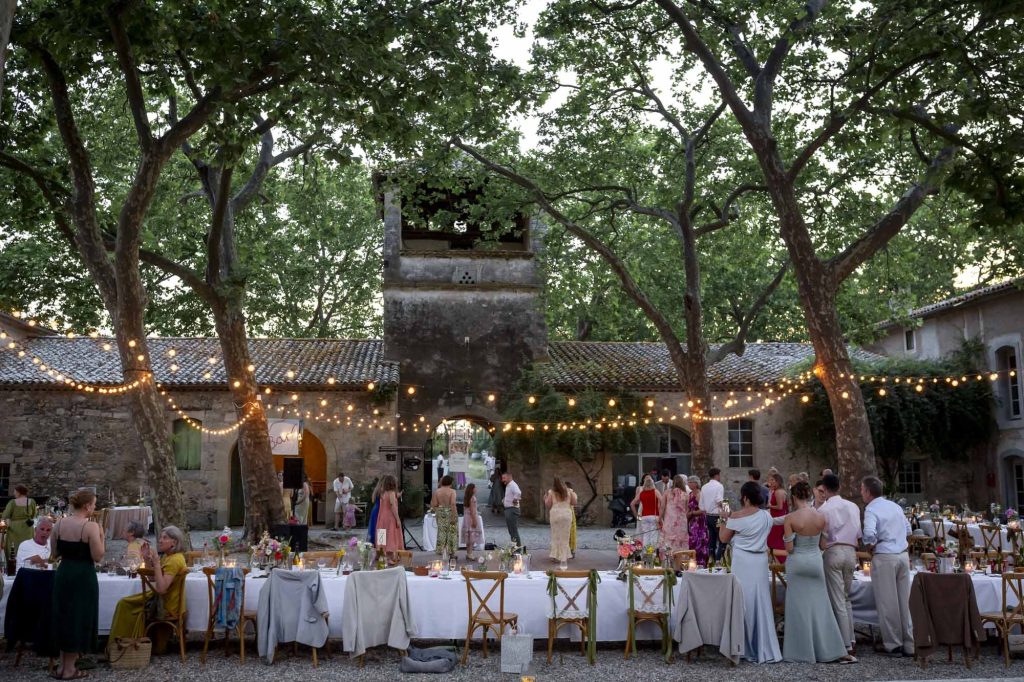
Planning an American wedding in France
So, can Americans get legally married in France?
Yes, but the legal route is specific, document-heavy and not practical for everyone.
For some couples, the mairie ceremony is worth the effort. For many others, marrying legally in the United States and holding a symbolic wedding in France is simpler, calmer and gives them far more freedom over the day itself.
The key is understanding the difference early.
Once the legal part is clear, you can get on with planning the celebration you actually want: the place, the people, the food, the light, the music and the feeling of being fully present in France.
I’m Kerry Morgan, a British wedding photographer based in the South of France. I photograph relaxed, emotional weddings for American couples travelling to France for château weddings, vineyard celebrations, intimate weddings and elopements.
You can see more of my work in my wedding photography portfolio, read more about planning an American wedding in France, or get in touch to talk through your plans.