
Getting Married in France: A Practical Guide for Overseas Couples

A wedding in France can appear beautifully simple from a distance. Find a château, invite the people you love and spend a few days celebrating together.
The reality involves a few more moving parts.
You need to understand whether your ceremony will be legally recognised or symbolic, what your venue actually provides, how guests will reach it, how the weather affects the timetable and which practical costs may sit outside the original venue price.
I live and work in southern France and have photographed weddings at châteaux, vineyards, private estates, abbeys and rural domaines across the region. This guide covers the decisions that make the greatest difference to how smoothly the day runs.
Most couples travelling from overseas:
Getting married in France at a glance
- complete the legal marriage in their home country
- hold a personal symbolic ceremony in France
- hire a venue for more than one day
- arrange transport between guest accommodation and the venue
- plan the ceremony around the heat and available shade
- keep a proper indoor or covered plan for poor weather
France is a wonderful place to bring people together, but a successful destination wedding depends just as much on logistics as it does on the setting.
Can foreigners legally get married in France?
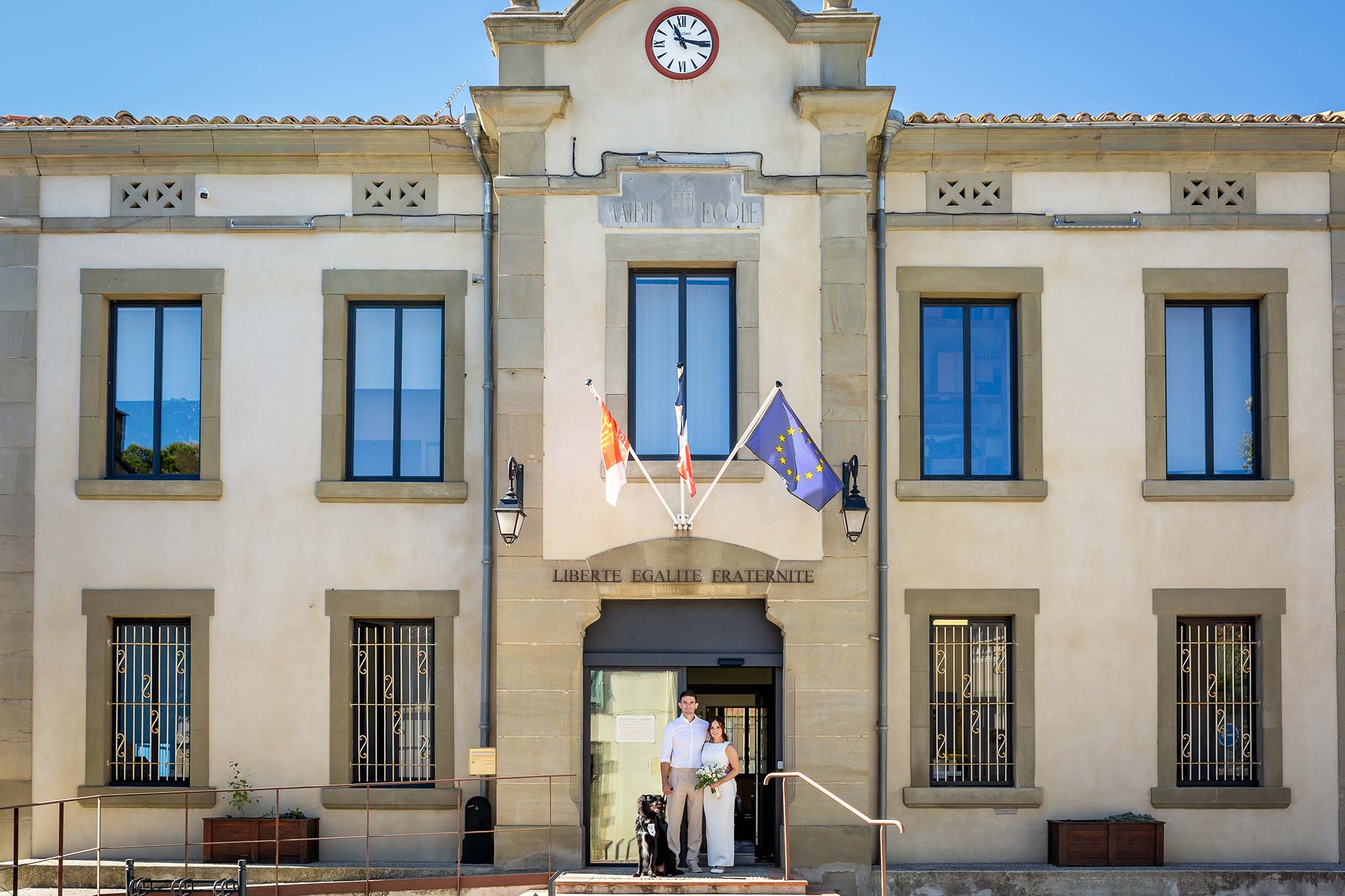
This is practical guidance, not legal advice. Marriage requirements depend on your nationality and circumstances. Confirm everything directly with the relevant mairie.
A legally recognised French marriage is a civil ceremony conducted by the mayor, a deputy or another authorised civil registrar. It usually takes place at the mairie, the local town hall, or in another approved communal building.
You cannot normally hold the legal ceremony in the garden of a private château or vineyard simply because that is where your celebration is taking place.
To marry in a particular French commune, at least one of you must usually have an established connection with it. This may be through your own home or residence, or through the home or residence of one of your parents.
A temporary residence generally needs to have been established for at least one continuous month before the publication of the banns. Supporting documents will be required, and foreign documents may need certified translations, legalisation or an apostille.
When both partners are foreign nationals living outside France and neither has the required connection to a French commune, organising a civil marriage in mainland France is generally not possible.
For that reason, many overseas couples complete the legal paperwork at home before travelling. They then have a symbolic ceremony at their French venue, followed by the full reception and celebration.
Marriage rules depend on nationality and personal circumstances. Always confirm your position directly with the relevant mairie and consult the [official French government guidance] before making arrangements.
A symbolic ceremony can still feel completely real
The word symbolic sometimes makes a ceremony sound less meaningful than it is. In practice, your French ceremony can contain everything you associate with getting married:
- your entrance and processional
- personal vows
- readings
- an exchange of rings
- ring warming
- music
- contributions from family and friends
- a celebrant-led ceremony
- a signing or commemorative certificate
- cultural or personal rituals

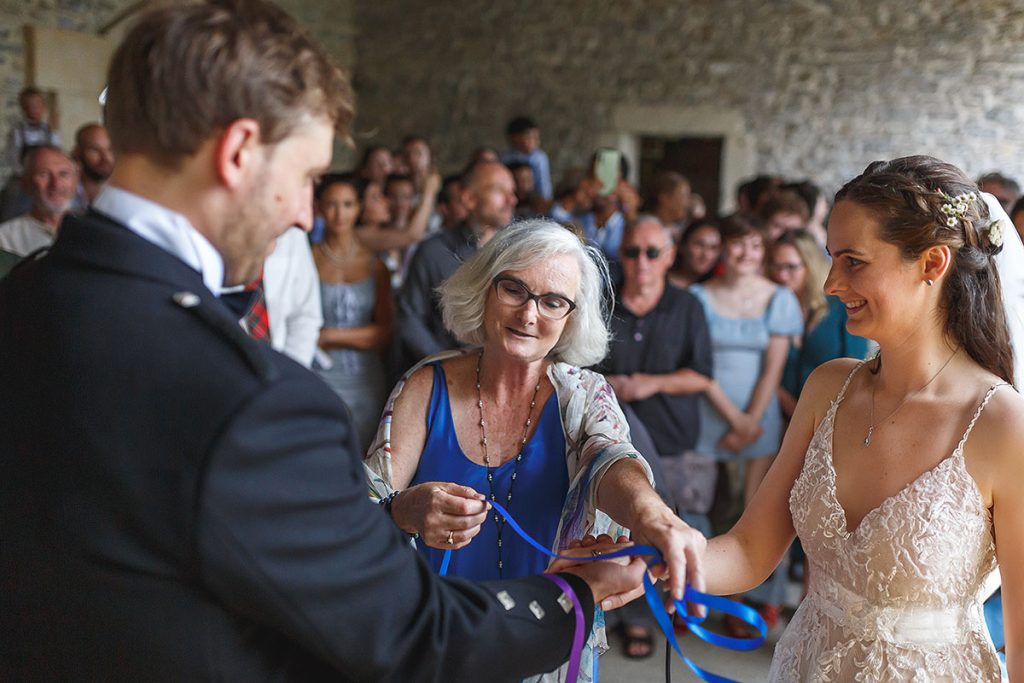
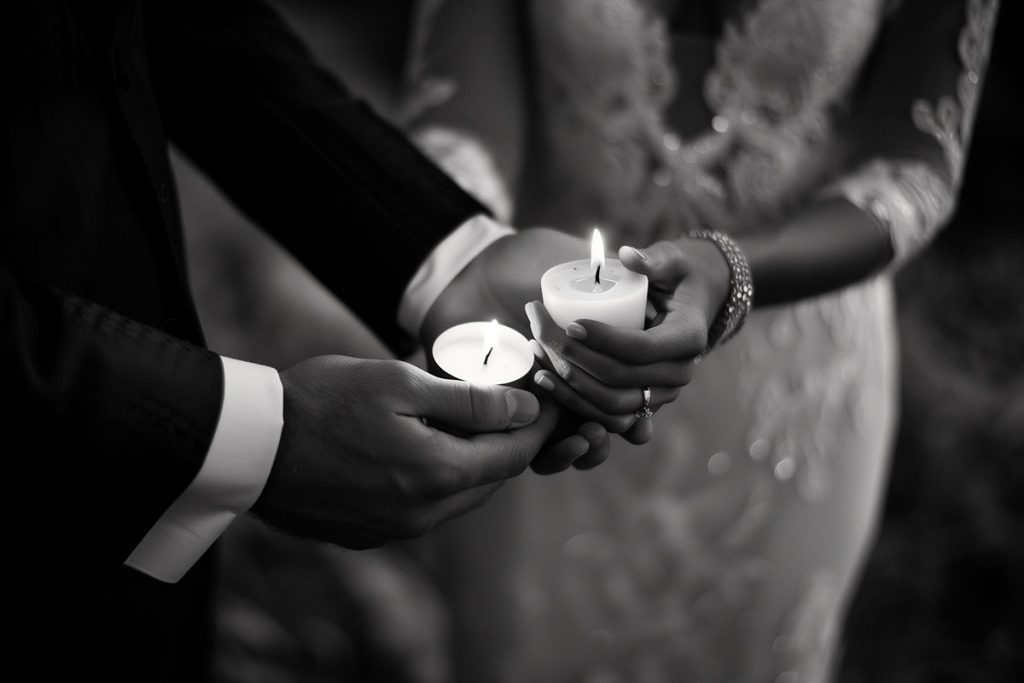
The only difference is that the legal part has already taken place elsewhere.
A symbolic ceremony also gives you more freedom. It can be held beneath a tree, in a courtyard, among vines, beside a lake or inside an ancient stone building. It can be conducted in one language or several, and it can be formal, informal, religious or entirely personal.
Wine blending, candle lighting and hand-fasting can all be included when they mean something to you. They should be treated as personal ceremony choices, not presented as traditional French wedding customs.
Getting married in France will feel important because of what is said, who is present and the promises you make. It does not need administrative paperwork taking place in front of your guests to carry emotional weight.
Choosing where in France to get married
France offers very different landscapes, architecture and styles of celebration. Choosing a region should involve more than finding a beautiful venue online.
Consider how guests will travel, where they will stay, what the weather is normally like and how much of the wedding you intend to organise yourselves.
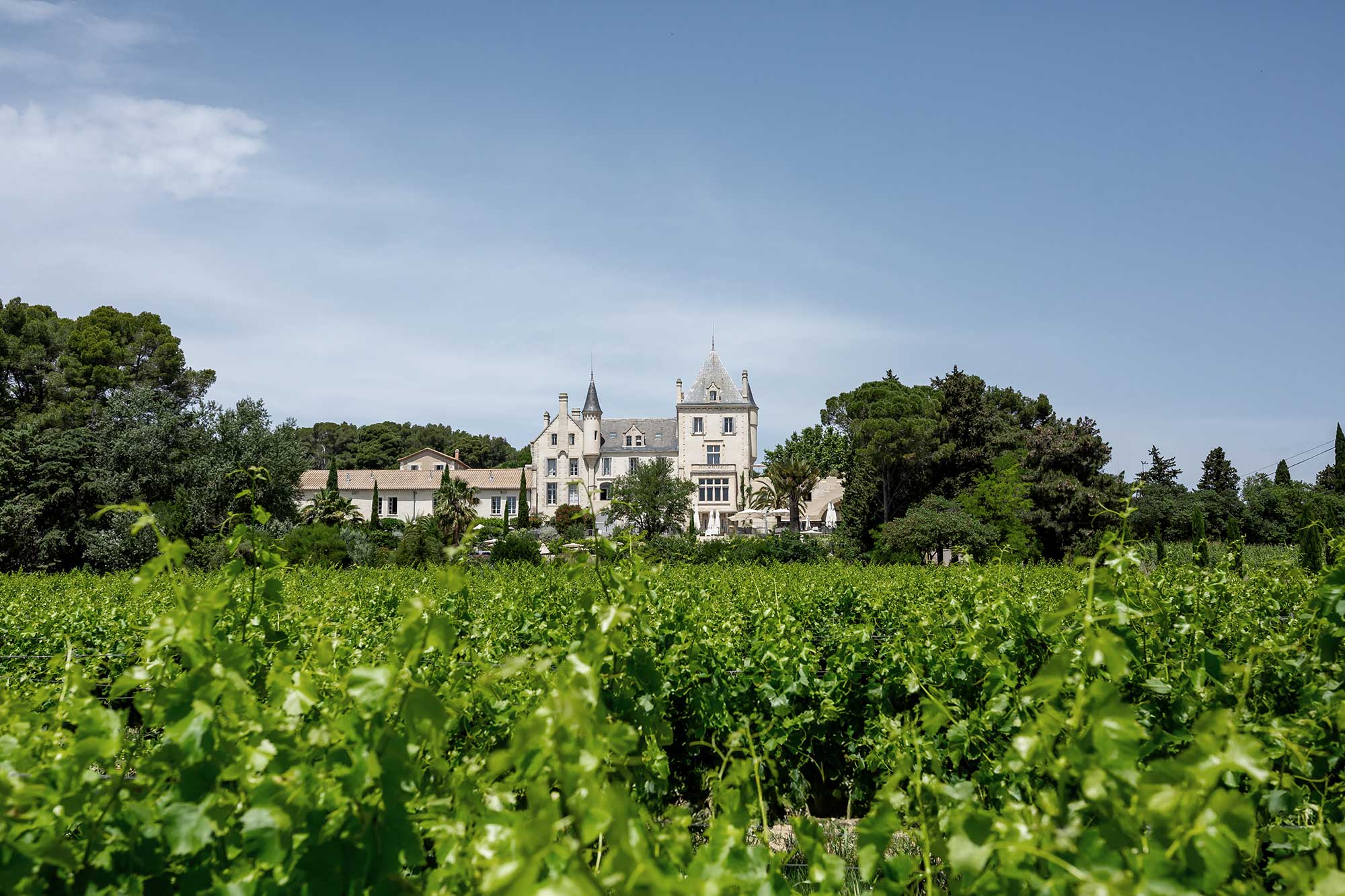
Occitanie
Occitanie covers a large part of southern France, including Hérault, Aude and Gard.
The region has vineyards, historic abbeys, stone villages, Mediterranean landscapes and large rural properties. Many venues provide space for guests to stay together and allow celebrations to run over several days.
It can work particularly well for couples who want a relaxed destination wedding with a strong sense of place.
Provence
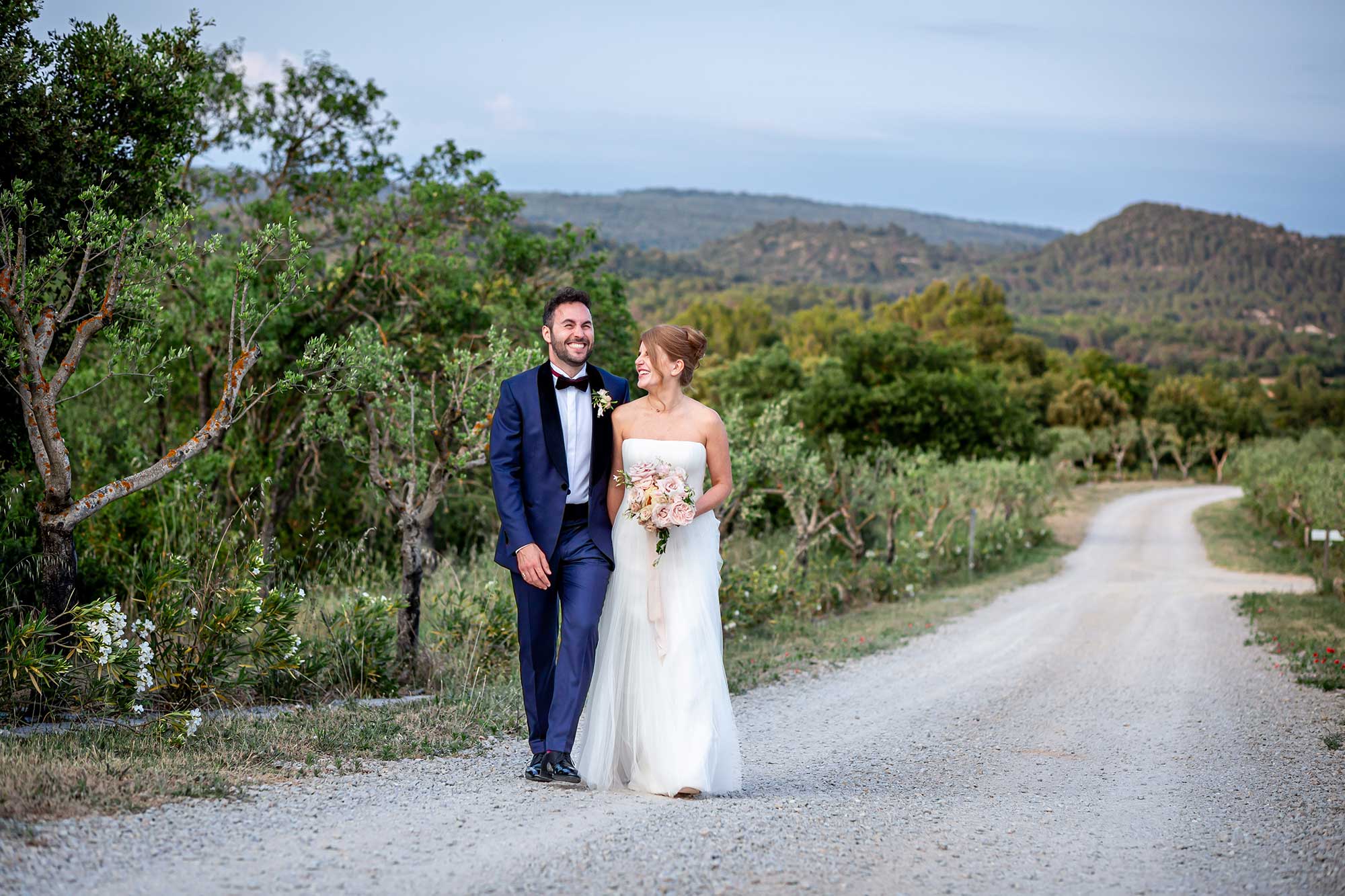
Getting married in France? Provence is known for pale stone buildings, olive groves, hilltop villages and dry summer landscapes.
Some parts are easy to reach from Marseille, Avignon or Nice, while more rural venues may involve longer transfers and limited local taxi services. Check the actual journey from the nearest airport rather than judging accessibility from the map alone.
The Côte d’Azur
The Côte d’Azur offers coastal scenery, villas, hotels and a more polished resort atmosphere.
It can suit a formal or glamorous wedding, particularly when guests are staying close to the venue. Traffic, parking and accommodation availability deserve careful attention during the busiest summer months.

Rural domaines and vineyards
A domaine is often less formal than a traditional château. It may include vineyards, working agricultural land, guest accommodation and several different spaces for the ceremony, drinks and dinner.
These venues can feel private and relaxed, but they are frequently outside towns. Guest transport and supplier access should be considered before booking.

Historic buildings and abbeys
Historic venues bring scale, atmosphere and architectural interest without requiring much decoration.
They may also have stricter rules regarding candles, music, confetti, vehicle access and attaching decorations to the building. Ask for these restrictions in writing.
You can explore more possibilities in my [South of France wedding venues guide]. Some great options if you are getting married in France.

What does a French wedding venue include?
Never assume that the venue price includes everything shown in the photographs.
A beautifully dressed dining room may have been created using hired tables, chairs, linen, lighting, flowers and tableware brought in by outside suppliers.
Before signing the contract, ask what is included in the quoted price and what must be arranged separately.
Check the following”
Ask the venue to show you the wet-weather plan during your visit. A vague promise that everyone can “move inside” is not enough. You need to know which room will be used, how many people it holds and whether the ceremony, drinks and dinner can all function there.
Wedding costs that are easy to overlook
The venue and catering are usually the clearest figures in the original budget. Several smaller costs can appear later and add up quickly.
Other expenses that may occure when you are getting married in France:
- airport transfers
- guest coaches or shuttle buses
- late-night return transport
- furniture and tableware hire
- additional lighting
- generators or upgraded electrical supply
- supplier travel and accommodation
- supplier meals
- cleaning and waste collection
- interpreters or translated documents
- a celebrant
- a planner or on-the-day coordinator
- childcare
- welcome drinks or a meal the night before
- a pool party or brunch the following day
- additional venue hours
- currency conversion costs
When paying French suppliers from a sterling or dollar account, allow some room for exchange-rate changes. Check whether bank fees are deducted from the amount received, as the supplier will still expect the full euro balance.
It is also sensible to keep part of the budget unallocated until the final few months. Transport, furniture, staffing and weather-related arrangements are often clearer once the guest numbers and timetable are confirmed.
Heat, weather and light in southern France
The photographs that attract couples to southern France often show outdoor ceremonies, long dinners beneath the trees and evening light across the vineyards.
Those conditions are possible, but the timing matters.
Getting married in France – Can you handle the Summer heat?
An exposed ceremony during the hottest part of a July or August afternoon can be uncomfortable for everyone. Guests may be sitting in full sun for longer than expected, particularly if the ceremony begins late.
Look at the ceremony area at the same time of day and in the same season as your wedding. A tree that appears to provide shade in the morning may be nowhere near the seating area by late afternoon.
Provide water before guests sit down and consider fans or parasols where appropriate. Elderly guests, young children and anyone travelling from a cooler climate may find the heat particularly tiring.

Wind
Strong winds can affect ceremony sound, unsecured decorations, candles, veils, flowers and table settings.
Ask the venue which areas are most sheltered and whether the ceremony furniture can be moved on the day. A good alternative location is more useful than hoping the wind will settle.
Rain
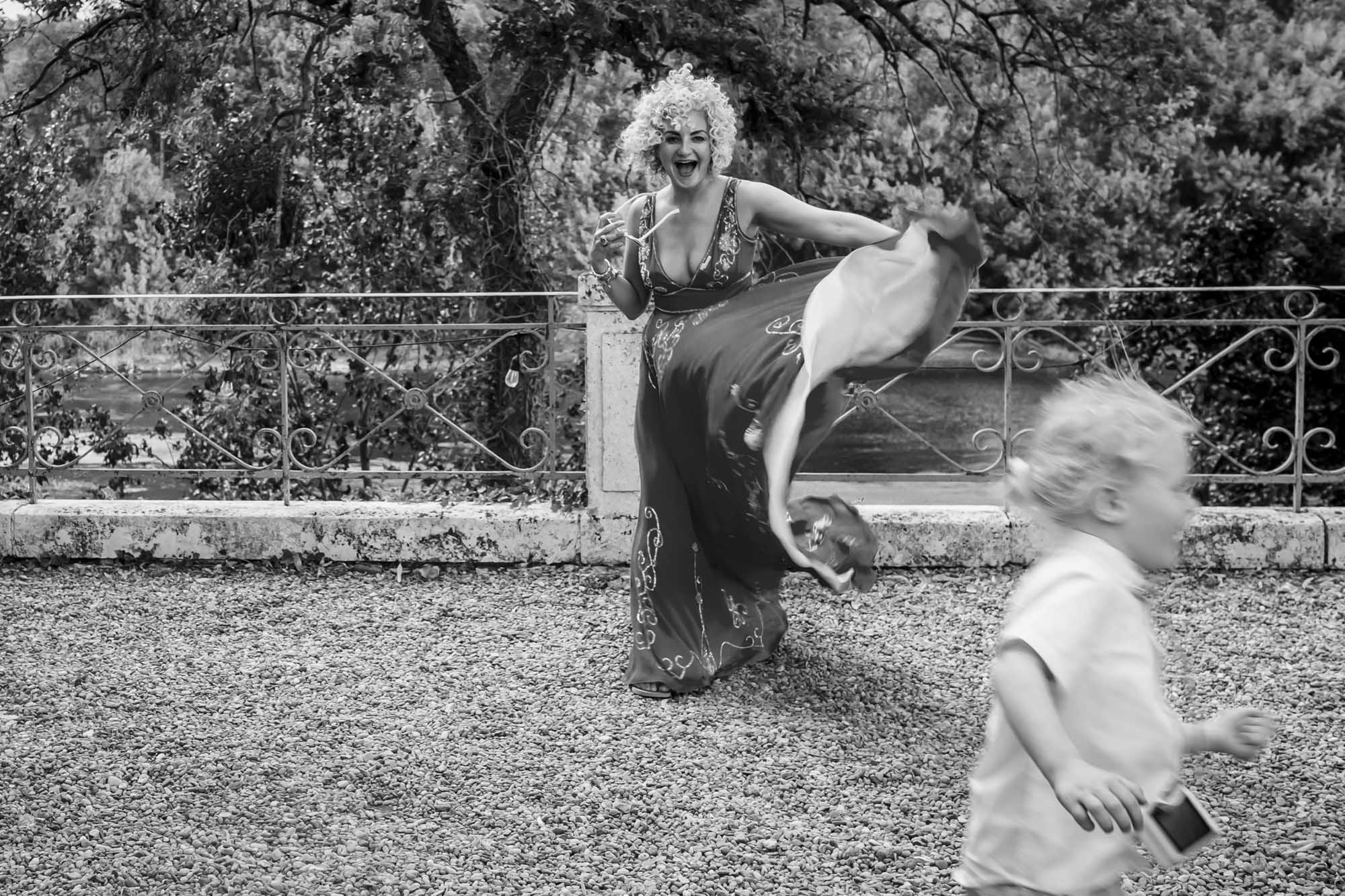
Southern France has plenty of sunshine, but it does rain, sometimes heavily.
Your backup should be a space you would genuinely be happy to use, not a storage room reluctantly cleared at the last minute. It should have enough capacity, reasonable light, safe access and a practical route between each part of the day.
Photography and evening light
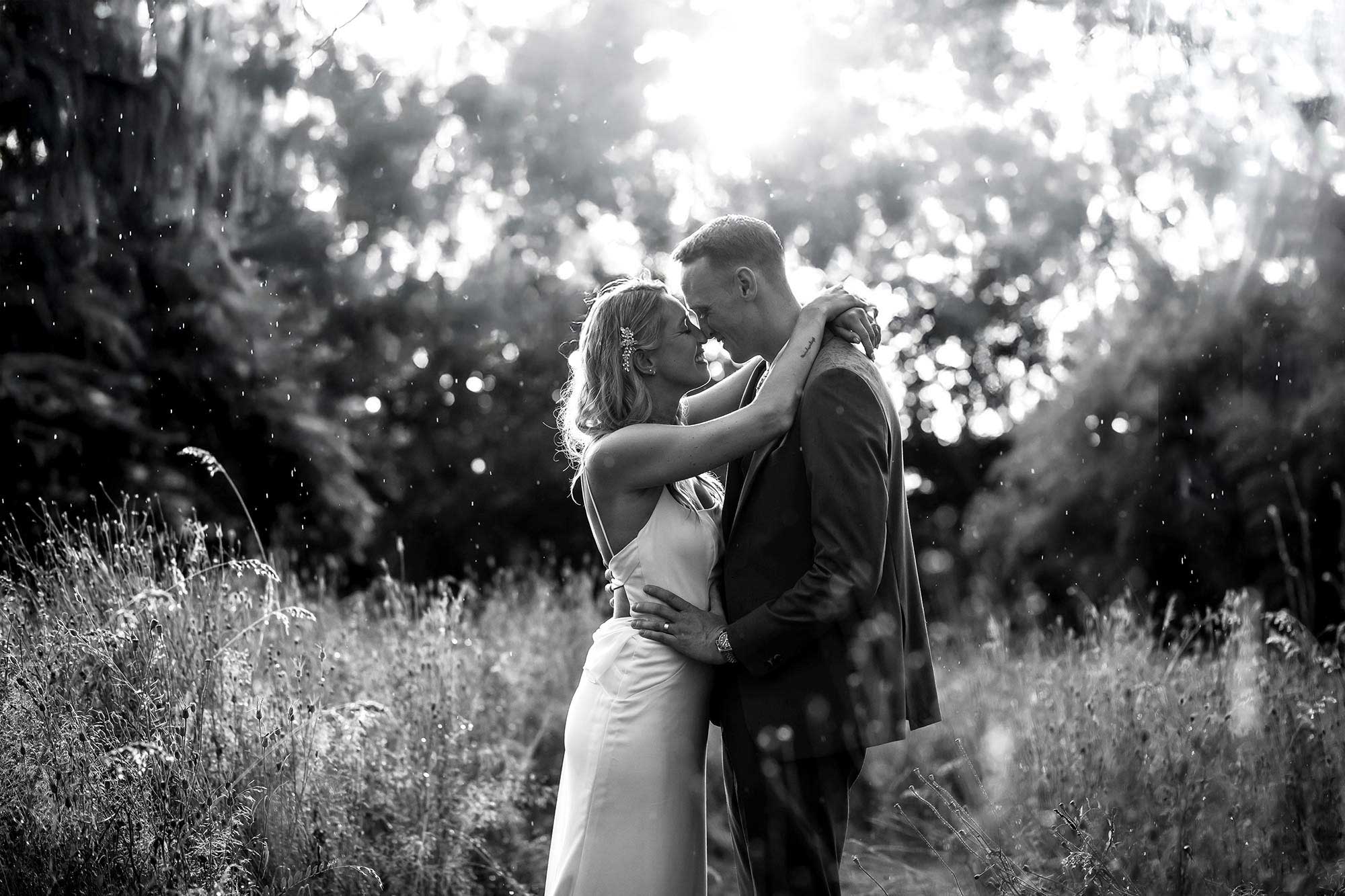
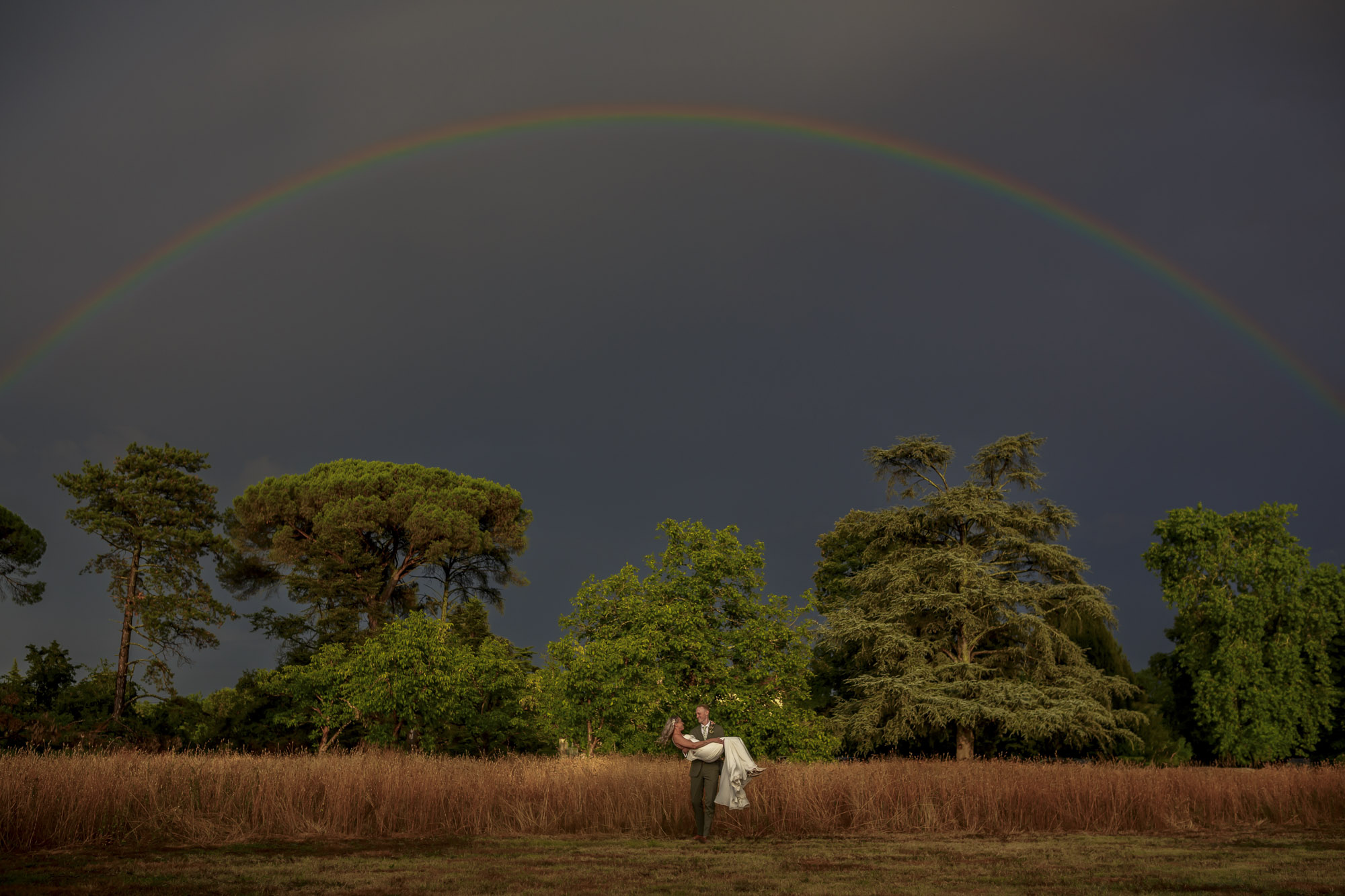
The best time for portraits depends on the date, location, surrounding hills and orientation of the venue.
I normally photograph couples for a short period rather than taking them away from the celebration for a long formal session. We can often use five or ten minutes during the drinks reception and another brief window when the evening light is at its best.
A good photographer should help you place this within the timetable rather than expecting the entire day to revolve around photographs.
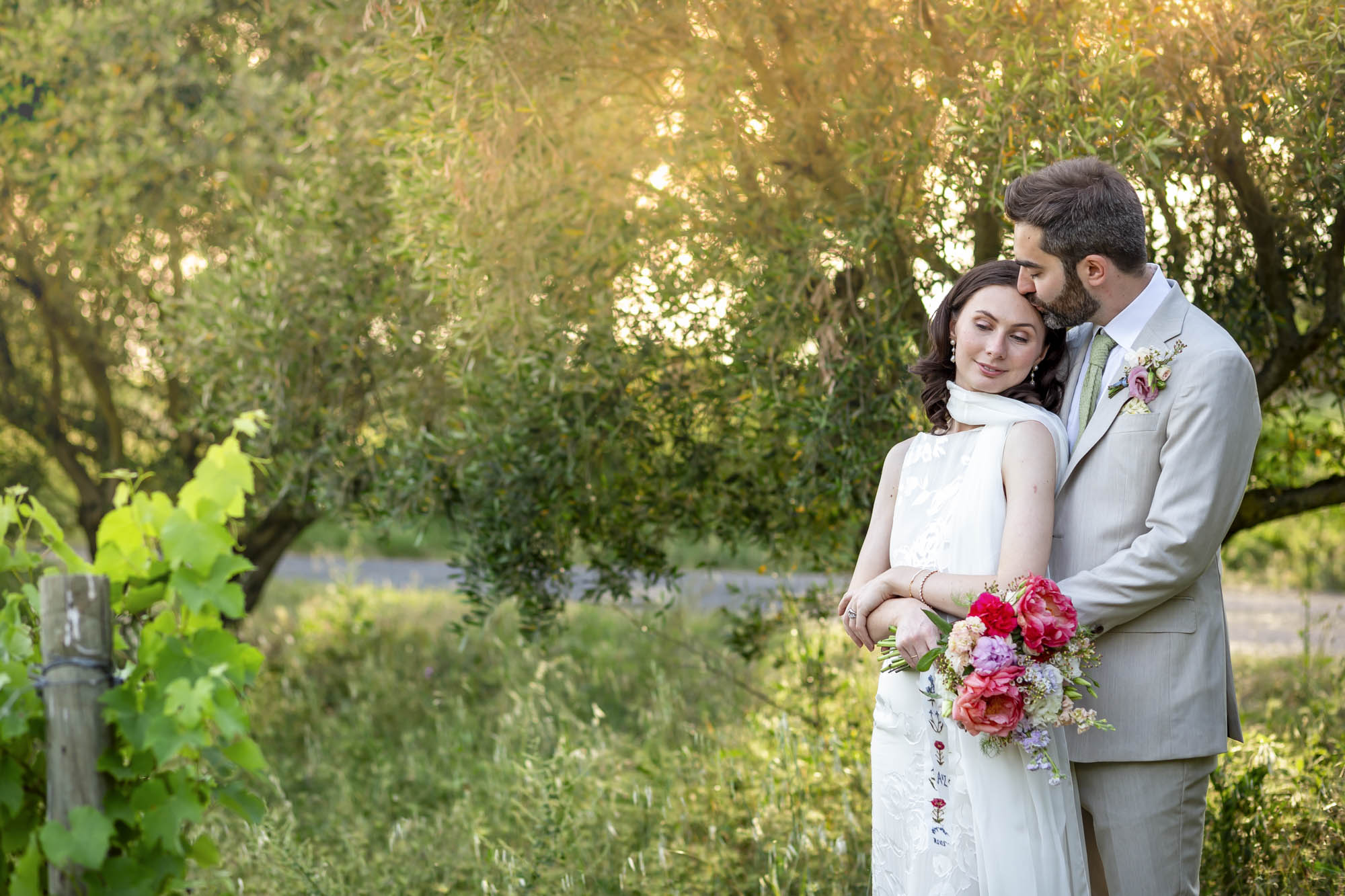
Plan a timetable that works when getting married in France
A destination wedding timetable should account for heat, travel, long meals and the fact that people are spending precious time together.
Do not copy a schedule from another wedding without considering the season and venue.
For a summer celebration, an approximate structure might look like this:
- 2.00 pm
- Preparations and venue photographs
- 4.30 or 5.00 pm
- Ceremony
- 5.30 pm
- Drinks and canapés
- 6.15 pm
- Family photographs
- 6.45 pm
- A short couple portrait session
- 7.30 or 8.00 pm
- Guests seated for dinner
- Once guests are seated
- Speeches before course
- The hour before sunset
- A second short portrait session, depending on the light
- 10.30 or 11.00 pm
- Cake, first dance and evening party
This is an example, not a fixed formula. In spring or autumn the ceremony and dinner may need to begin earlier because the light disappears sooner.
Avoid scheduling every five minutes. A timetable needs enough structure to coordinate suppliers, but enough space for conversations, movement and the unexpected moments that make the day feel alive.
French catering and your wedding timetable
Food is often a major part of a French wedding, and the catering schedule may be longer and more elaborate than overseas couples expect.
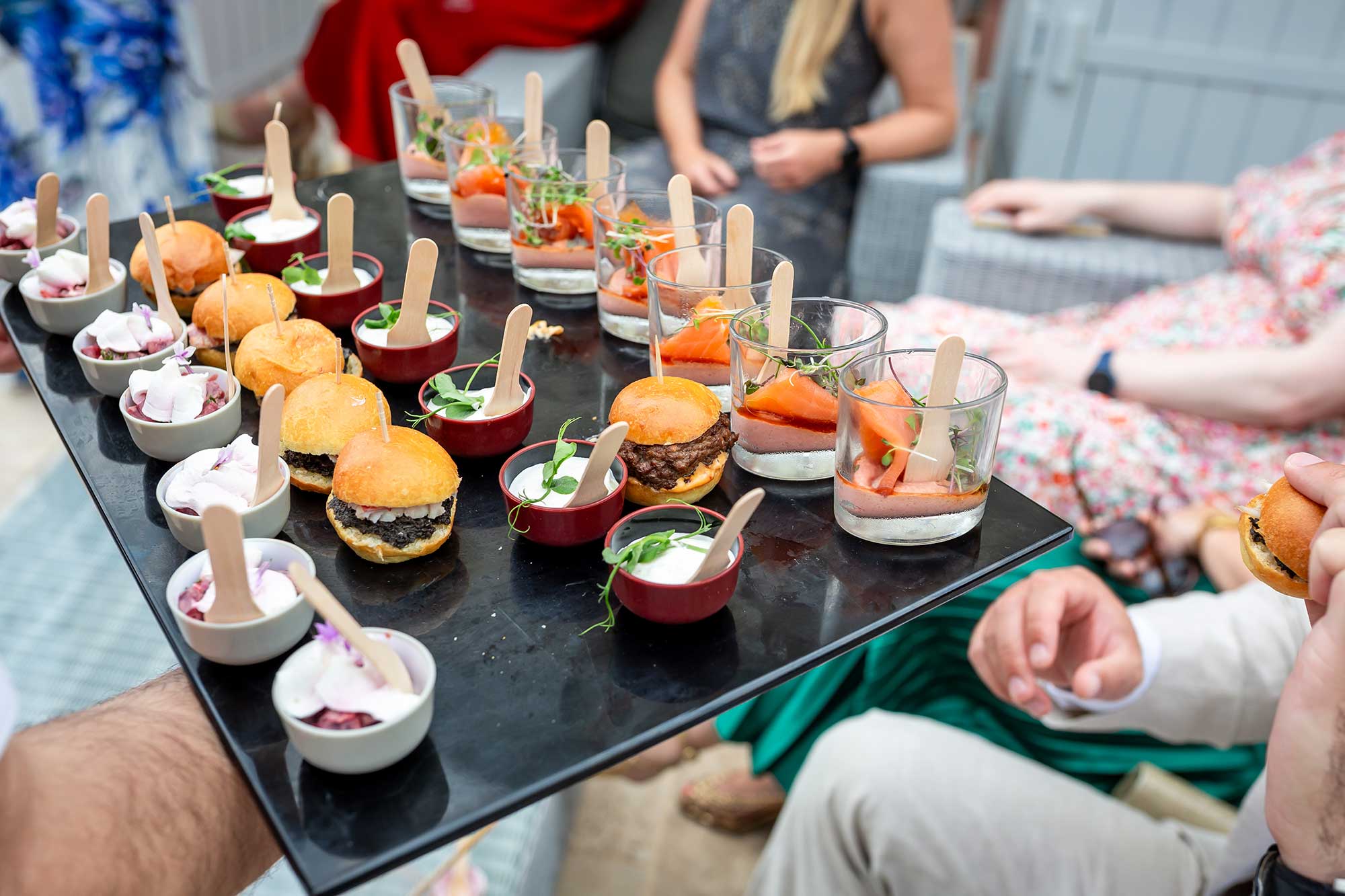
The drinks reception, sometimes described as the vin d’honneur or cocktail, can include substantial canapés and food stations. This may be followed by a formal dinner with several courses, cheese, dessert and coffee. Ask the caterer how long service usually takes for your number of guests before fixing the evening timetable.
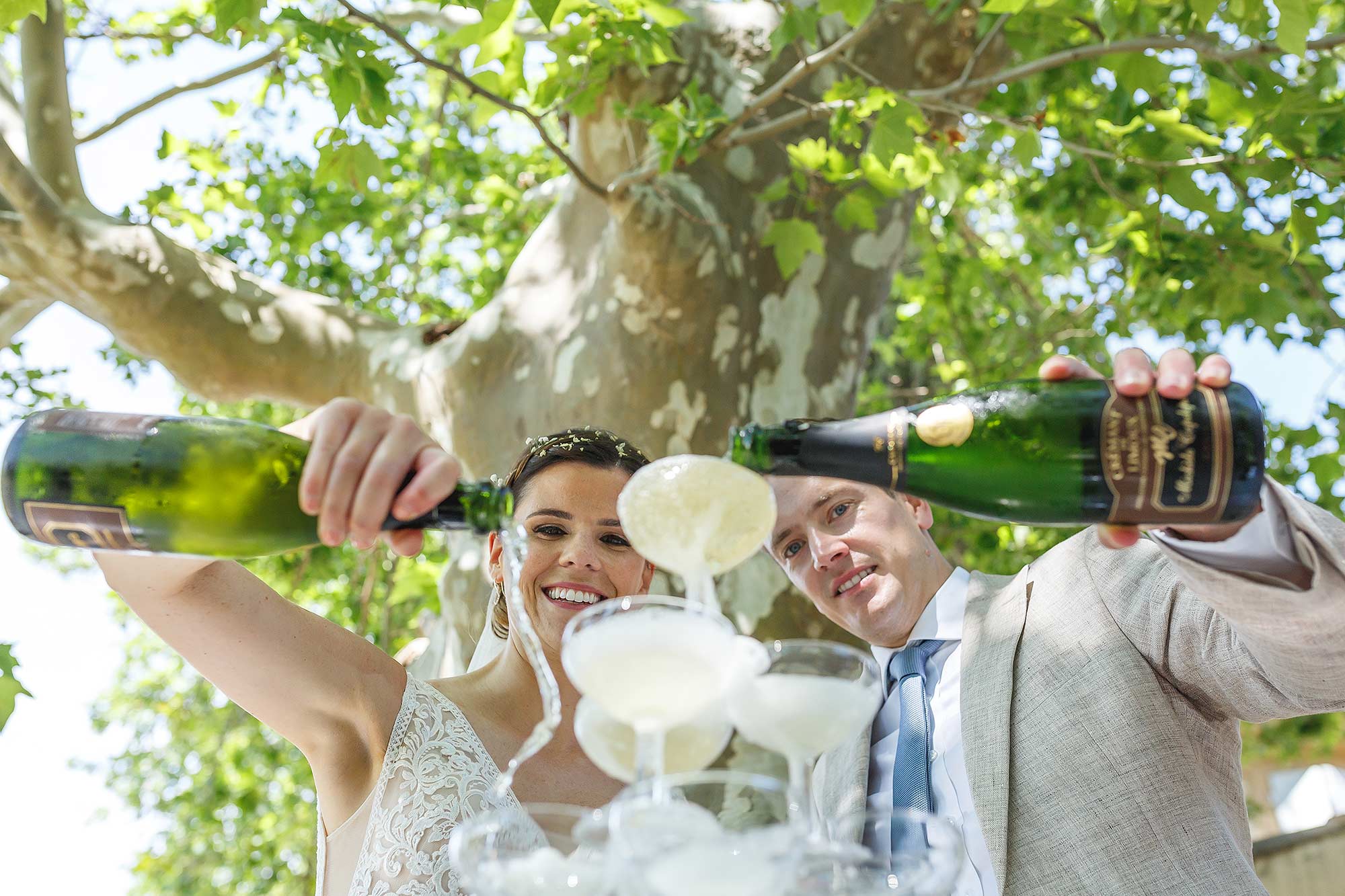
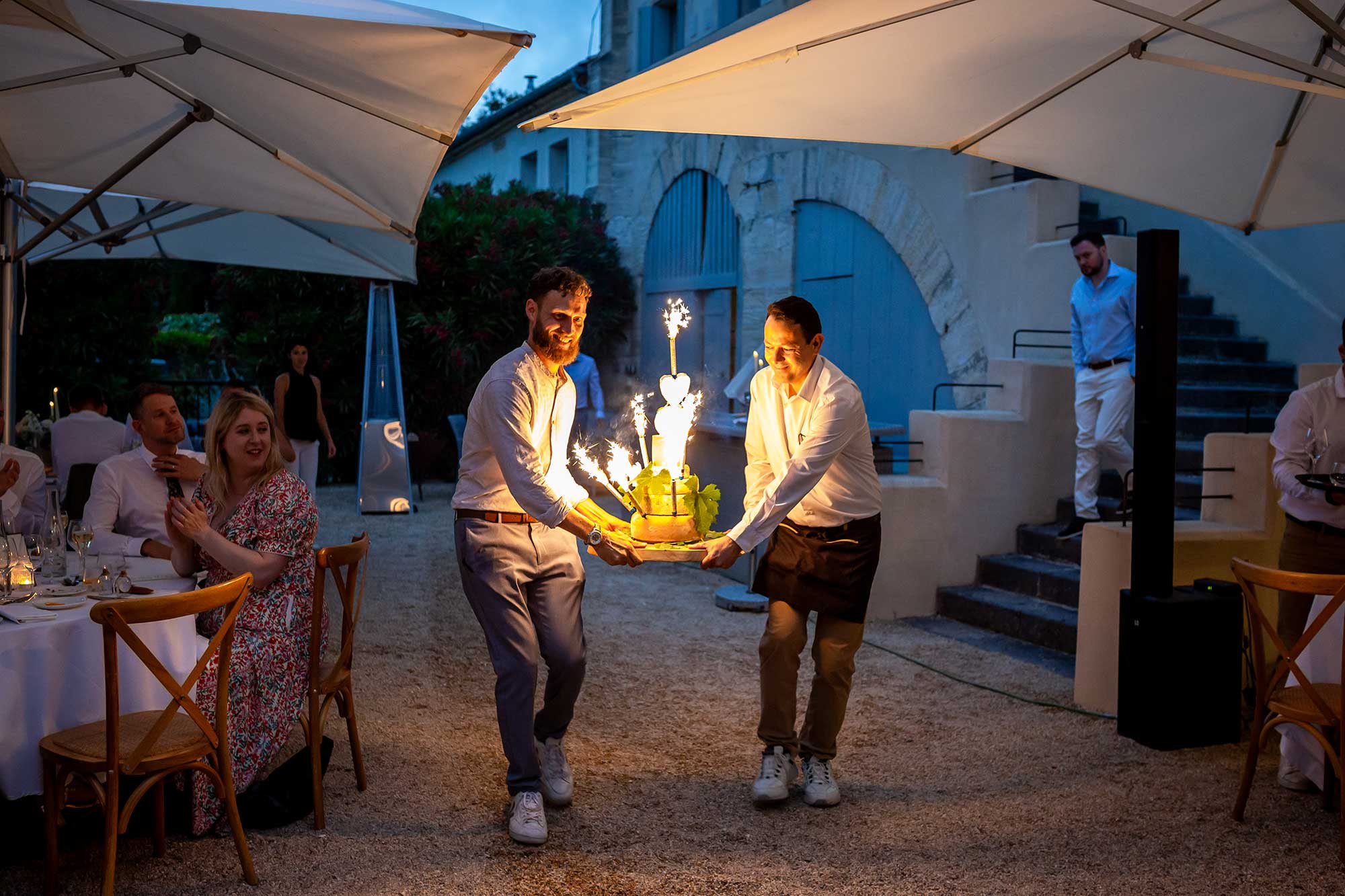
I recommend holding speeches once guests are seated but before dinner is served. Getting them out of the way early means the speakers can relax and enjoy their meal without worrying about standing up later. It also avoids interrupting food service and allows photographers and other suppliers to take a proper break.
Confirm when supplier meals will be served. They should ideally arrive at the same time as the guests’ main course, or slightly earlier, so that your photographer is ready for sunset portraits, cake cutting and the first dance.
Also check whether the catering quotation includes staff, tableware, linen, drinks service, clearing, equipment and additional hours. These details vary between venues and caterers when getting married in France.
Read my full guide to French wedding catering and planning the meal.

Make travelling easy for your guests
Transport can become one of the most difficult parts of a rural French wedding.
A venue may look close to an airport on a map while still requiring a two-hour drive, several toll roads or a difficult final journey along small country lanes.
Before confirming the venue:
- calculate the real driving time from the likely arrival airports
- find out whether guests need to hire cars
- check local taxi availability
- identify a town or group of villages where most guests can stay
- ask whether a coach can physically reach and turn at the venue
- confirm where coaches and taxis can wait
- plan several return times rather than one departure at the end
- provide the full French address and a precise map pin
- warn guests about limited shops, restaurants or transport nearby
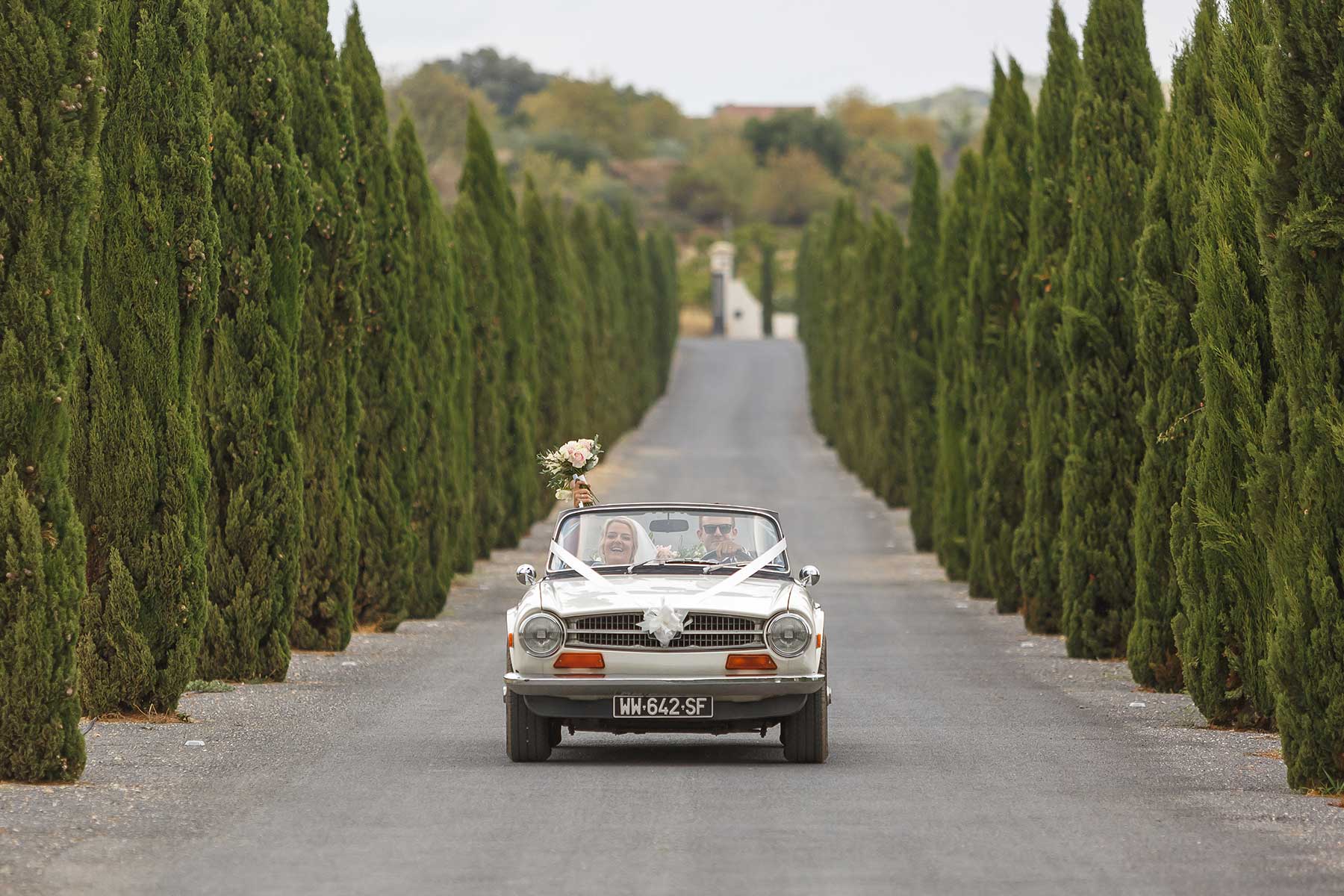
Do not rely on guests finding taxis late at night. Rural services can be limited, and mobile reception is not always reliable. In a lot of areas of France, there is no uber.
If you are getting married in France, a shared coach or organised shuttle removes uncertainty and allows everyone to relax. A first return for families and older guests, followed by one or two later departures, usually works better than asking everyone to leave at the same time.
Choosing suppliers for a wedding in France
A supplier does not necessarily need to live beside the venue, but they should understand destination wedding logistics.
Before booking, check:
- what is included in the proposal
- travel and accommodation charges
- deposit and payment dates
- cancellation and postponement terms
- insurance
- setup and collection times
- overtime charges
- whether meals are required
- who will attend on the day
- how communication will be handled
- when the final work or products will be delivered
Contracts may be written in French or English. Ask questions before signing and do not rely on a verbal agreement when the detail affects the budget or schedule.
An experienced planner can be extremely helpful when a wedding has several locations, a large guest list or many hired elements. For a simpler celebration, a capable venue coordinator and clear supplier team may be enough.
The key is knowing who is responsible for each decision. A venue coordinator manages the venue. They may not be responsible for chasing your transport company, arranging place settings, briefing musicians or keeping every supplier on schedule.
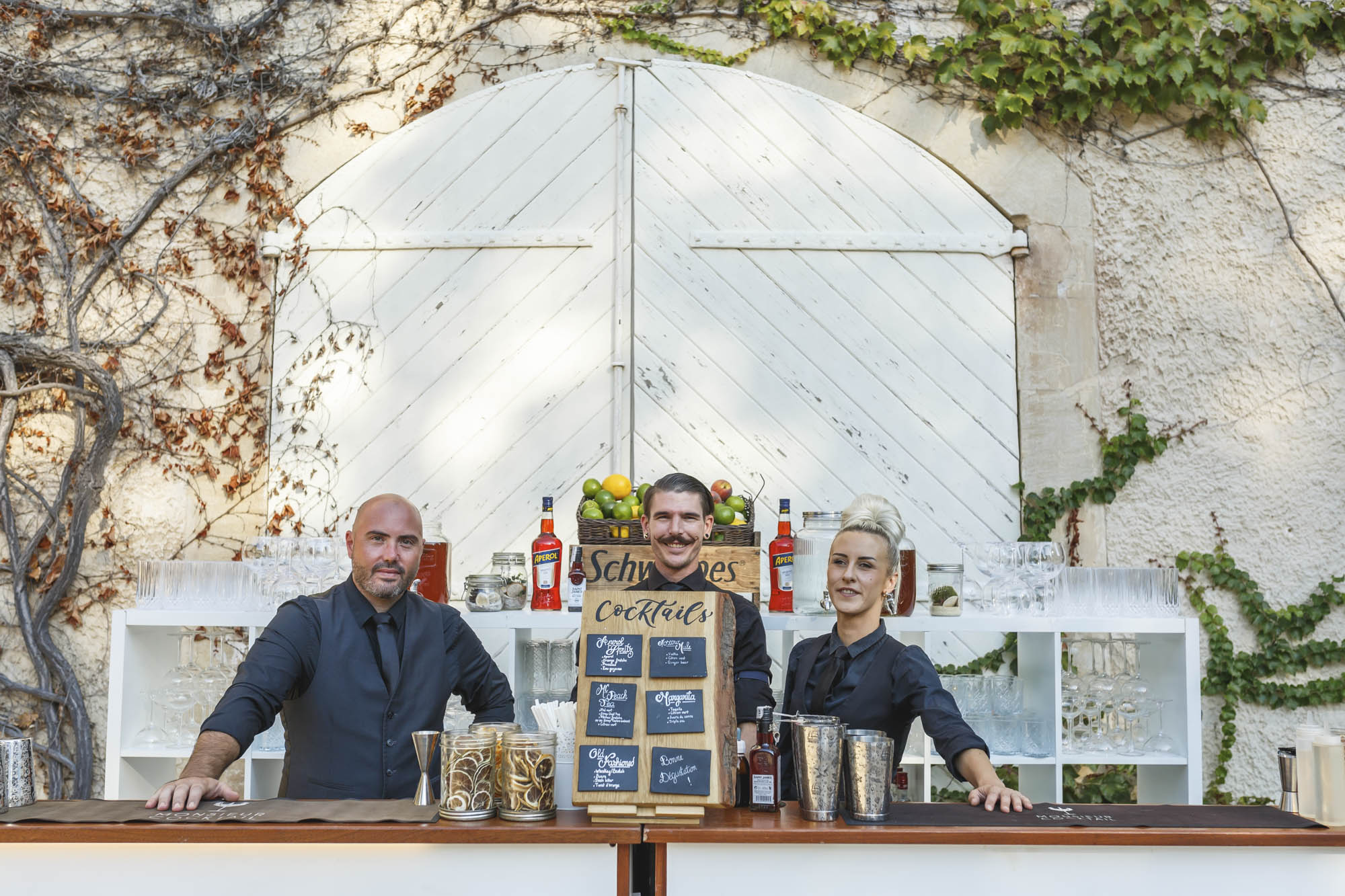
Choosing a wedding photographer in France
A photographer’s portfolio should show more than portraits taken in beautiful evening light.
If you are getting married inFrance, ask to see complete wedding galleries, not just a selection of favourite images. Look at how consistently they photograph:
- preparations in small or dark rooms
- ceremonies in harsh sunlight
- guests and family relationships
- drinks receptions
- group photographs
- speeches
- indoor dinners
- first dances and evening celebrations
- rain or difficult weather
- the venue and surrounding landscape
Pay attention to the editing as well as the photographs themselves. Strong processing should support the image without becoming the first thing you notice.
Editing fashions can date quickly. Heavy orange tones, grey skin, crushed shadows, artificial grain, extreme desaturation and strong preset filters may look current now, but could feel tired in a few years. Your photographs should still look natural, flattering and convincing long after the current trends have passed.
Look for consistent skin tones, believable colour, detail in highlights and shadows, and black-and-white photographs with a good tonal range. The gallery should feel coherent without every image being forced through the same filter.
The photographer should also be able to work calmly with guests, communicate clearly and fit photographs around the celebration. Technical ability matters, but so does judgement, timing and the way they handle people.
My own approach combines documentary photography with elegant, lightly guided portraiture. I photograph weddings as social events, paying attention to movement, laughter, reactions, relationships and the atmosphere around you.
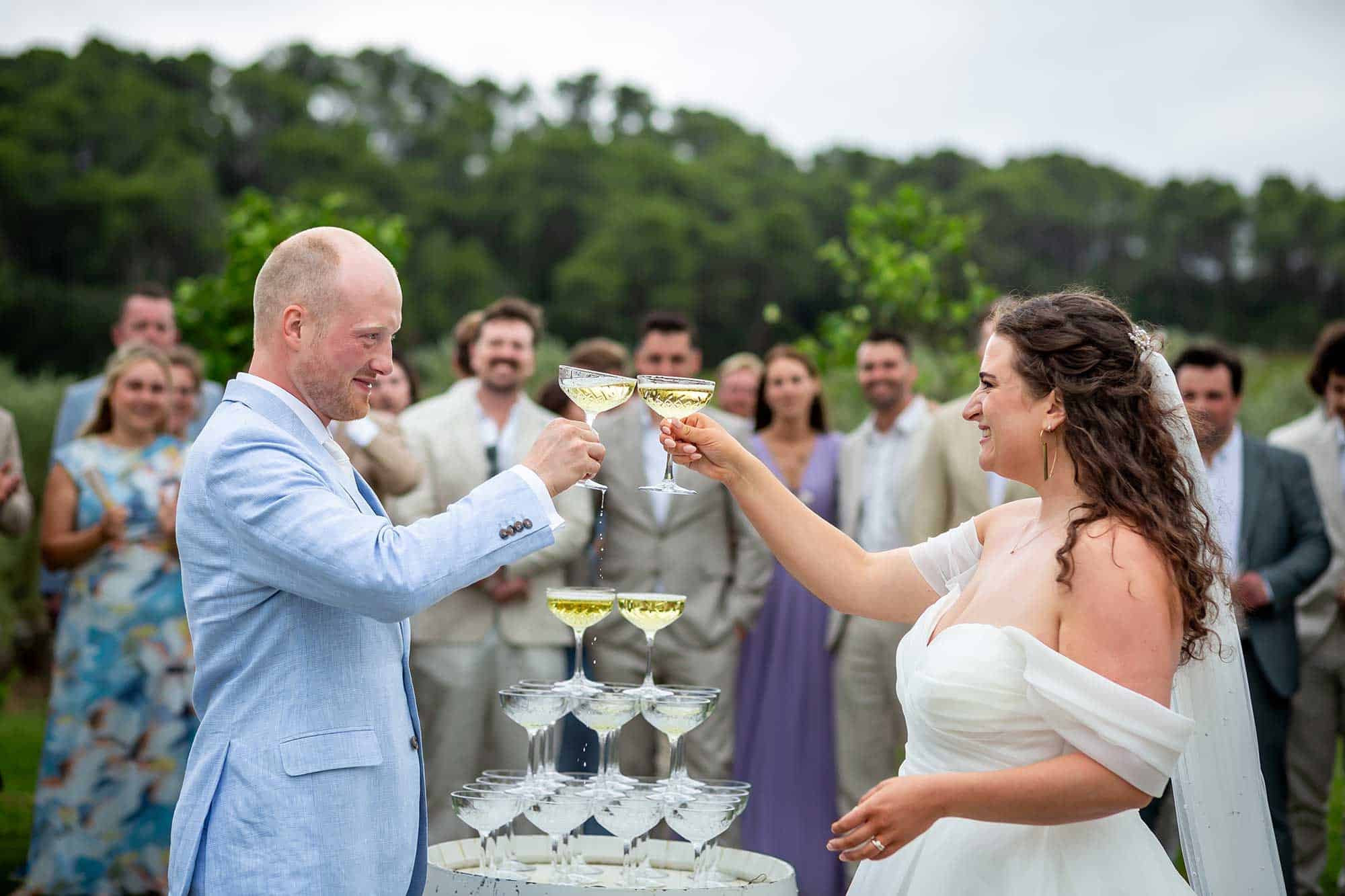
I use the venue and landscape as part of the story, not simply as a background. Portraits are short and relaxed, so you can return to your guests quickly and enjoy the day you have spent so long organising.
My editing is natural and restrained. I want the colours, skin tones and atmosphere to feel true to the day, so the photographs still look beautiful in twenty years rather than feeling tied to a passing style.
You can see a broader selection in my [wedding photography portfolio] and find practical information about coverage, travel and delivery in my [wedding photography FAQs].
Planning your wedding in France
You do not need to have every detail decided before contacting your photographer.
A date, an approximate location and a sense of the celebration you are planning are enough to begin. I can advise on photography coverage, the timetable and how to make the best use of the venue and available light. Getting married in France? See if I am free!